Campaign 2026
25 November – 10 December 2026 · Sierra Leone
Gender Equality · Gender Justice · Ending Violence against Women and Girls. "Every woman and girl deserves safety, dignity, equal rights and access to justice. Break the silence. End discrimination. Stop gender-based violence. Stand for equality."
About the Campaign
Preach Peace Organization is implementing the 2026 16 Days of Activism campaign to raise public awareness of gender equality, gender justice and the prevention of gender-based violence, while encouraging communities and institutions to protect the rights, dignity and safety of women and girls.
Planned activities include community dialogues, youth and school engagement, radio and social-media advocacy, engagement with traditional and community leaders, and public commitments to reject violence and discrimination. The campaign aligns with the international 16 Days of Activism framework and the UN Women theme: "UNiTE to End Violence Against Women and Girls: Ensure Justice, Protect Survivors, End Impunity."
This page sets out our implementation plan ahead of the campaign dates. Attendance figures, photographs and outcomes will be added after each activity has taken place and been verified.
Why It Matters
The Sierra Leone Demographic and Health Survey 2019 found that 61% of women aged 15–49 had experienced physical violence since age 15; 61% of ever-married women had experienced physical, sexual or emotional violence by a current or most recent husband or partner; and only 40% of women who had experienced physical or sexual violence had sought help to stop it. These national findings reinforce the need for prevention, community education, survivor-centred support, accountability and accessible referral pathways.
Our Goal
To contribute to peaceful and inclusive communities in which women and girls enjoy equal rights, equal opportunities, protection from violence and fair access to justice.
Increase public understanding of gender equality, human rights and gender justice.
Promote prevention of domestic violence, sexual abuse, harassment, child marriage and other harmful practices.
Improve awareness of safe, confidential and appropriate services and referral options for survivors.
Encourage women's and girls' participation in education, leadership, livelihoods and community decision-making.
Engage men, boys, traditional leaders, youth groups and other stakeholders as partners in preventing violence.
Promote the rights, accessibility and meaningful participation of women and girls with disabilities.
Day by Day
25 November – 10 December 2026
Public launch event with an orange-ribbon awareness activity.
Open discussion with community members on gender equality.
Awareness session on recognizing and preventing domestic violence.
Discussion sharing referral information and justice pathways.
Awareness session with youth and school groups.
Session addressing child marriage and other harmful practices.
Dialogue on livelihoods and economic independence for women.
Awareness session on preventing harassment and creating safe spaces.
Engagement centred on accessibility and participation.
Session building community commitments from men and boys.
Radio discussion to extend the campaign's reach.
Meeting to agree concrete community actions.
Discussion on increasing women's role in decision-making.
Social-media campaign addressing online abuse.
Public pledge event with signed community commitments.
Closing reflection marking Human Rights Day and the campaign's end.
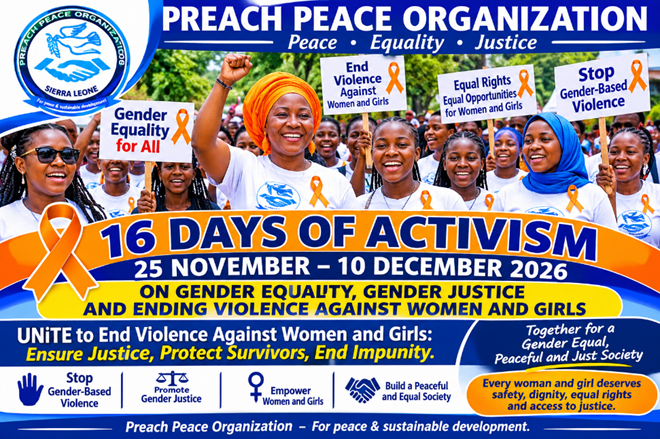
Campaign Poster
This poster is an illustrative campaign visual for proposed publicity and awareness — not a photograph of an activity that has already taken place.
Planning Targets
Proposed targets, to be adjusted to available resources and confirmed partnerships — not yet achieved results.
Safeguarding
Participation in every activity is voluntary. We will not pressure anyone to disclose personal experiences of violence. Personal information is kept confidential, and photographs of children are only taken with appropriate guardian consent. Identifiable images or stories of survivors are never published without informed consent and a careful assessment of safety risks. Our staff and volunteers provide accurate referral information and never promise legal, medical or psychosocial services we are not equipped to provide.
We invite government institutions, development partners, civil society organizations, women's rights groups, media houses and community members to support this campaign — through community mobilization, accessible information materials, radio outreach, transport, interpretation, disability inclusion, and monitoring support.
Become a Partner PPOSL